FCC E-Rate Inquiry to Ask About Reducing Funding, Expanding School Internet Filters
The agency’s proposal on local permitting shot clocks would ask about extending them to 'commingled' telecom and broadband infrastructure.

WASHINGTON, June 5, 2026 – The public draft of a Federal Communications Commission inquiry into its $2.5 billion-per-year broadband subsidy for schools and libraries would ask commenters whether or not the program should see its funding reduced or sunset.
The program was set up in 1996 to address a lack of internet access in education centers, and the draft noted that in the decades since, most schools report having broadband and infrastructure has expanded widely.

The draft was posted Thursday and could change before the FCC’s June 25 meeting at which commissioners will vote on the item. If adopted, it would seek comment on multiple aspects of the program.
“Should the E-Rate program be limited or sunset to reflect today’s extensive connectivity rates?” the document reads. “At what point should policymakers conclude that the program’s core objective has been achieved? We seek comment on whether Congress intended E-Rate to operate indefinitely, regardless of the extent to which schools and libraries have achieved universal connectivity.”
On a call with reporters Wednesday ahead of the June agenda announcement, a senior FCC official said the agency was taking into account that E-Rate provides discounts on ongoing services like broadband subscriptions.
The official said the main thrust of the inquiry would have to do with the agency’s interpretation of the Children’s Internet Protection Act (CIPA).
CIPA requires E-Rate participants to filter internet content that would be harmful for students. The draft of the inquiry says the FCC currently interprets CIPA to require schools and libraries to filter only computers they own.
Since many students now have their own phones and devices, the draft asks whether the agency should require schools to filter at the network level or prevent third-party devices from connecting to E-Rate-funded networks.
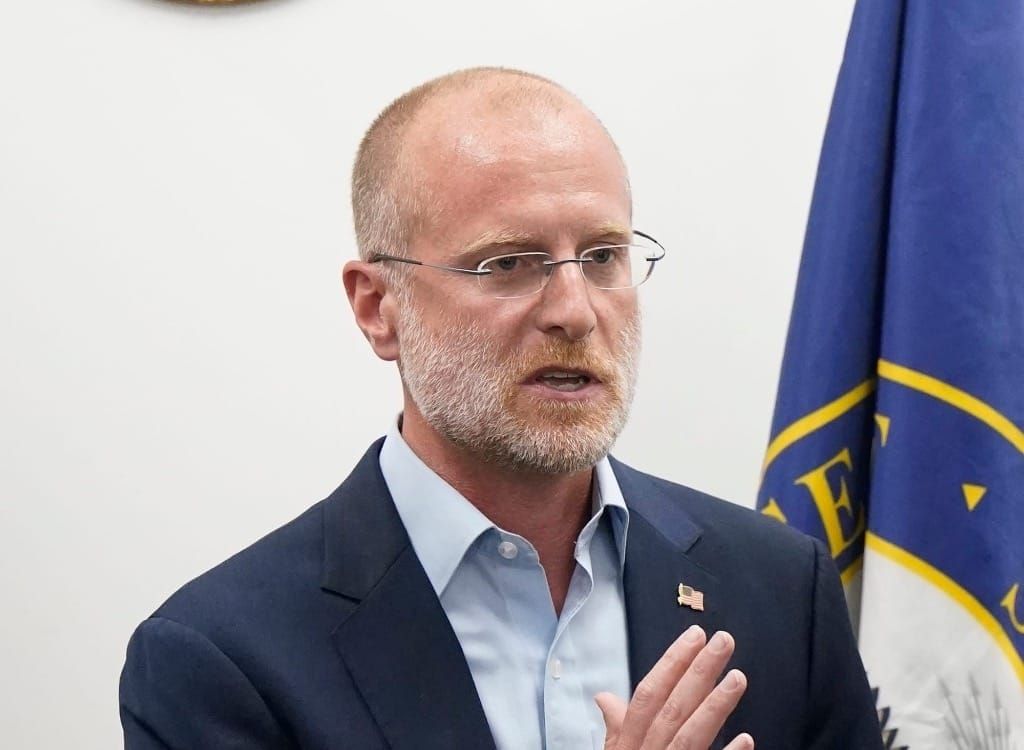
“If you bring your own device to a network supported by this program, you don’t necessarily have any filters on where you can go. Kids are ultimately finding pornography, and that’s a problem,” FCC Chairman Brendan Carr said in a Fox News interview Thursday.
The item, and the announcement Wednesday, also noted an increase in screen time among young people as test scores have declined.
The draft asked whether the FCC had authority to limit students’ screen time on E-Rate networks, and whether it should distinguish educational screen time from recreational screen time.
Tying E-Rate to a detrimental rise in screen time had some program advocates uneasy.
“I'm all 4 the FCC looking at how schools (and libraries!) use E-Rate,” Harold Feld, senior vice president of Public Knowledge, posted on X Friday. “But justifying this as being about screen time concerns, feels like either an excuse to reduce the program or an effort to regulate outside the scope of FCC authority.”
Joey Wender, executive director of the Schools, Health, and Libraries Broadband Coalition, put out a joint statement Wednesday with Noelle Ellerson Ng, a top School Superintendents Association official, defending the fund and urging the agency to separate different kinds of screen time.
“We look forward to working with the Commission to find ways to better protect our nation's children while improving a program with thirty years of bipartisan success,” they said.
Arielle Roth, head of the National Telecommunications and Information Administration, said in a statement that she supported the review. NTIA held a listening session in December on the consequences of excessive screen time for kids.
Preempting local rules
The agency also released a public draft of a proposal that would seek comment on a 120-day shot clock for state and local permitting agencies processing wireline telecom deployments.
The draft would propose explicitly extending new permitting rules to infrastructure that’s capable of providing telecom services like voice calling, even if it’s being deployed for broadband. The FCC has legal authority to preempt state and local policies that block the deployment of telecom services, which broadband is not.
“If a provider seeks to deploy infrastructure that enables the ability to provide telecommunications services, no state or local requirement may prohibit or have the effect of prohibiting it, regardless of whether the provider offers other services on a commingled basis,” the draft reads.
The item would ask for input on that conclusion, and on the practical impact on broadband deployments if the rule were ultimately adopted.
The issue is currently being disputed before the FCC.
Maryland ISP Talkie Communications is saying the state should be blocked from imposing certain requirements on its fixed wireless build for the same reason, because the gear is capable of providing telecom voice service on a commingled basis. The state countered the deployments are in all likelihood mostly for broadband.
The draft didn’t refer to the case but cited comments from trade groups saying their fiber networks carried both voice and data traffic.
The proposal would also seek comment on limiting state and local permitting fees for wireline projects. The agency has another open docket on preempting rules related to wireless permitting.
The issue is contentious, with local governments strongly opposing any preemption and ISP trade groups pushing the FCC and Congress to make it happen. Broadband providers say reviews stall projects for months — a concern the FCC’s draft said it was sympathetic to — and municipalities say their reviews are necessary to ensure projects are done safely.