NTIA Defends BEAD Pole Rules
Providers anticipate understaffed cities, utilities being a deployment challenge.

WASHINGTON, June 12, 2026 — The Commerce Department wants to expand federal pole attachment rules as part of its flagship broadband grant program. Electric cooperatives, which are usually exempt from the regime, aren’t happy about it.
The National Telecommunications and Information Administration’s top attorney defended the agency’s policy Thursday.

“Our thinking was, if you’re going to be part of our program, you should be following the same rules that everybody’s held accountable to,” said David Brodian, NTIA’s chief counsel.
He spoke during a Federal Communications Bar Association webinar focused on the $42.45 billion Broadband Equity, Access, and Deployment program.
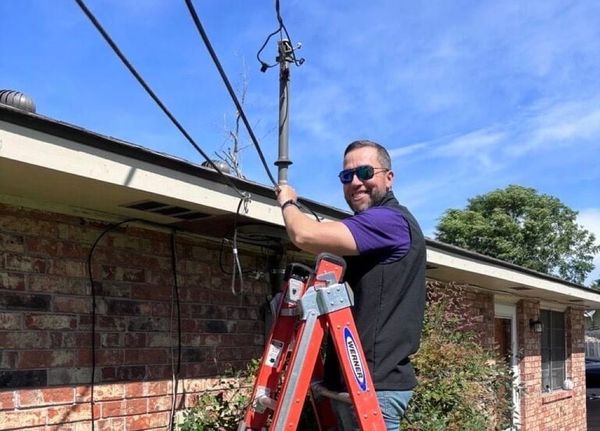
NTIA requires grant winners under the program that own utility poles to submit their entire in-state footprint to the Federal Communications Commission’s pole attachment regime, if they’re not already regulated by a state law. That functionally means many electric co-operatives that won BEAD grants would have to go by FCC rules, which are normally limited to investor-owned utilities, because state laws tend to focus on those same investor-owned utilities.
The agency instituted the rule in January, after providers had already bid for and been tentatively awarded BEAD funding. Co-ops aren’t happy about the requirement, operators and their trade group said last month, because the FCC rules limit what they can charge telecom providers for attachments and set processing timelines.
NRECA CEO Jim Matheson has argued that co-ops often serve more difficult areas than for-profit utilities, and that without a profit incentive they’re less likely to use their monopoly on poles to charge unfair rates. The trade group represents rural electric co-ops.
One NRECA member has described handing back a BEAD award over the issue. Bree Maki, head of Minnesota’s broadband office, said on the webinar she had three winners refuse awards “for various reasons, pole attachments being one of them.”
Brodian acknowledged there was “definitely some initial resistance to it,” but said NTIA was also trying to avoid a situation where a co-op that won BEAD funding would charge other participants more than its own ISP subsidiary for pole access.
“We didn’t want to see any anticompetitive behavior in the program — where somebody was trying to get on BEAD poles and they couldn’t because the provider is also in the BEAD program,” he said.
Phil Macres, an attorney at Klein Law Group who works with BEAD participants, was supportive of the NTIA policy.
“At the end of the day, some cooperatives are playing nice in the sandbox. But there’s a number of them that aren’t, and they’re exploiting the fact that they’re exempt” from FCC rules, he said.
A May analysis from New York Law School found about 42 percent of the fiber miles set to be deployed with BEAD funding would be aerial, and about 40 percent of those aerial fiber miles would be hung on cooperative-owned poles.
Non-deployment
Brodian said NTIA was working to publish guidance on how states could spend non-deployment funds under BEAD “shortly.” That money comprises more than $22 billion, partly a result of Trump administration efforts to drive down deployment spending.
“As Secretary Lutnick mentioned, we’re trying to get policy guidance out, hopefully in the very near future,” he said.
Commerce Secretary Howard Lutnick told senators at an April 22 hearing he was aiming for non-deployment guidance “over the next two months.” That would put the target sometime around June 22.
Current work, challenges ahead
States are currently in the process of ironing out final contracts with BEAD winners, and permitting and construction are beginning to get underway. Some permitting work can begin before contracts are signed.
Panelists from ISPs and state broadband offices noted NTIA requires those contracts to be standard across all a state’s BEAD winners, and there wasn’t much room to redline.
Emily Hale, assistant director of Tennessee’s broadband office, said the state had taken the approach of offering to clarify certain provisions in writing if ISPs wanted, rather than making changes to a grant agreement.
She said Tennessee has usually done cost-based reimbursements for broadband programs, rather than deployment milestone reimbursements that NTIA has suggested for BEAD. She said preparing to administer those and creating clear expectations on documentation had taken “a concerted effort” from the office.
A new proposed rule from the White House’s Office of Management and Budget would actually prohibit milestone-based payments like the ones being used for BEAD, among a host of other changes to federal grants. Alexis Schrubbe, a broadband expert and program manager at Ready.net, wrote this month that the rule could require states to renegotiate agreements if it’s adopted. Comments on the proposal are due July 13.
Christian Hoefly, senior corporate counsel at T-Mobile, said he was also focused on trying to make sure it was clear in the company’s grant agreements exactly what it had to document to ensure it was paid by state offices. He said the documents can be long and complicated, and feared missing provisions that would become important later on.
“I’m turning grey at a faster rate on some of those provisions that aren’t the terms in these contracts that we’re reviewing first, but are on the 90th page and no one’s thinking about it,” he said.
Carl Gipson, vice president of local government affairs at Comcast, said the company anticipated some issues working with pole owners and municipalities, largely because they might not have the staff to process a flood of permits or pole attachment requests quickly.
“A lot of these BEAD projects are in rural areas or smaller cities,” he said. “Do they have the staffing capability to handle a lot of this stuff?”
Macres said NTIA’s yearslong effort to ease the federal environmental permitting process for BEAD had paid off. The agency created an online processing tool to funnel BEAD projects into categorical exclusions — kinds of projects that are unlikely to have a significant impact and thus can avoid a full, time-intensive review.
“Some of this now is only taking an hour, or it could take weeks instead of months or hours instead of days,” he said. “It’s looking more promising than it has been before.